I was 33 years old, standing on the edge of a soft mat, heart hammering so hard I could hear it in my ears, trying to convince my legs to jump backwards into nothing.
Every part of my brain was screaming: "You're too old for this. You'll break your neck. This is stupid. Walk away."
I jumped anyway.
And I under-rotated, landed on my upper back, and lay there staring at the ceiling wondering what kind of idiot tries to learn a backflip in his thirties. Most people said it was too late. Most people had a point — on paper. But I've never been great at listening to most people.
Bring it on, baby.
Why the Backflip Terrifies Adults
Kids learn backflips on trampolines without thinking about it. They jump, flip, land, and run off to do it again. They don't have the thing that makes the backflip nearly impossible for adults: risk awareness.
As adults, we know what a broken neck means. We know what a herniated disc feels like. We've seen the fail compilations. We have mortgages, jobs, families, a son who needs his father in one piece. Our brains are wired to calculate risk, and the backflip sets off every alarm in the system.
The fear isn't about the flip. It's about trusting your body when you can't see the floor. For a fraction of a second, you are completely blind to your landing. You've committed to a rotation, and there is nothing you can do except trust that your body will complete it.
That trust — in yourself, in your training, in the thousands of reps that brought you here — is the real skill. The rotation is just physics.
Commit fully or get hurt — there is no half-measure. The backflip taught me this about training. Life taught me the same thing about everything else. Half-commitment is more dangerous than full commitment. Always.
The Physical Prerequisites: What Your Body Needs First
Before you attempt a backflip, your body needs certain capabilities. I'm listing these because I see people trying backflips without them, and that's how injuries happen.
Explosive vertical jump. You need to jump high enough to give yourself time for a full rotation. If you can't jump at least knee-height from standing, you don't have the explosive power yet. Box jumps are your friend. Start with a height you can do comfortably and add 5cm every two weeks. I worked up to jumping onto a waist-high box before attempting any flip work.
Core strength. The tuck in a backflip is a violent core contraction. You're pulling your knees to your chest at maximum speed while rotating backwards. If your core is weak, the tuck will be slow, the rotation will be incomplete, and you'll land on your neck. Minimum requirement: 30-second hollow body hold, 10 hanging leg raises (full range), and a solid L-sit.
Neck and lower back health. This is especially critical for adults. Your cervical spine and lumbar spine must be healthy and mobile. If you have any existing neck or lower back issues, address them first. I spent a month doing neck strengthening exercises (neck curls, neck extensions with a plate) and lower back mobility work before my first flip attempt. Not glamorous. Absolutely essential.
Spatial awareness. Can you do a forward roll without getting dizzy? Can you do a cartwheel? Can you jump and land with control? These basic movement skills build the proprioception you need for aerial rotation. If a cartwheel makes you anxious, you're not ready for a backflip. Work backwards from simple to complex.
The Progression: Step by Step
Here's exactly how I progressed. No steps skipped, no timeline compressed.
Step 1: Box jumps for explosive power (Weeks 1-4)
Three days a week. Start with a comfortable box height. Work up to 5 sets of 5 explosive jumps. Focus on driving through the balls of your feet, swinging your arms hard, and extending your hips fully. The arm swing and hip extension are what generate the height in a backflip — train them now.
Step 2: Trampoline backflips (Weeks 4-8)
If you have access to a trampoline, this is where you learn the rotation pattern. The trampoline gives you extra height and a forgiving landing surface. I did my first trampoline backflip in week five. It was ugly, I over-rotated and fell on my face, but I completed a full rotation. That proof of concept — "my body CAN do this" — was worth more than any drill.
If no trampoline, use a gym with foam pits. Worth the day pass.
Step 3: Spotted backflips on mat (Weeks 8-14)
Find someone who can spot you. Not your buddy who "thinks he knows how." Someone with actual experience spotting flips. A gymnastics coach, a parkour instructor, a martial arts teacher. Their hand on your lower back guides the rotation and gives you the confidence to commit.
I did spotted backflips twice a week for six weeks. The first three weeks, I needed the spot every time. By week four, the spotter was barely touching me. By week six, they were standing nearby but I was completing the rotation on my own with the spot as a safety net.
Step 4: Wall backflip (Weeks 14-18)
This is an intermediate step some people skip. I didn't skip it and I'm glad. The wall backflip (also called wall flip or wall spin) involves running at a wall, planting one foot on it, and using the wall as a launch platform. It teaches you the rotation with a visual reference point and less commitment than a standing backflip.
This step also introduced me to parkour movement, which opened up a whole new world. Parkour as cardio is incredibly underrated — running, jumping, vaulting, climbing, flipping. The entire universe is our playground. Go play!
Step 5: Freestanding backflip (Weeks 18-24)
Standing on solid ground. No trampoline. No spotter. No wall. Just you and the air behind you.
I remember the first attempt. I stood there for three minutes doing nothing. Just standing. My body refused to jump. Three minutes of internal warfare between the part of me that had trained for this and the part of me that wanted to stay alive.
Then I jumped. And I landed it. Feet on the ground. Standing. The ugliest, most over-rotated, barely-landed backflip in history. I didn't care. I screamed. I actually screamed in the middle of the park like a lunatic. 🦾
The Failed Attempt That Grounded Me
I need to tell you about the bad one. Because if I only tell you the success story, I'm doing the same thing the YouTube guys do.
Week 16. I was feeling confident — too confident. Tried a freestanding backflip before I was ready. Under-rotated badly. Landed on my upper back and the back of my head hit the ground. Not hard enough for a concussion, but hard enough to scare me senseless.
I couldn't train for two weeks. Not because of physical injury — my neck was sore but nothing was damaged. I couldn't train because the fear came back tenfold. Every time I set up for a jump, my body locked up. The failed attempt had written a new fear response into my nervous system.
It took two weeks of going back to trampoline work, rebuilding confidence step by step, before I could attempt a freestanding flip again. Those two weeks felt like months.
The lesson: respect the progression. Ego got me hurt. Patience got me the backflip. The same principle applies everywhere — investing, building a business, learning a skill. Skip steps and you'll pay for it.
The Mental Game: Bigger Than the Physical One
The backflip is maybe 30% physical and 70% mental. Your body has the physical capability long before your mind grants permission to use it. The entire journey is about closing that gap between what your body can do and what your mind allows.
Things that helped me mentally:
Visualization. Before every session, I closed my eyes and visualized the flip in perfect slow motion. Jump, tuck, rotate, spot the landing, extend, land. Twenty times in my head before one attempt with my body. This isn't woo-woo nonsense — it's motor pattern rehearsal that elite athletes use in every sport.
The three-second rule. When you're standing there ready to flip, you have three seconds before fear takes over. If you haven't jumped within three seconds, walk away and reset. Standing there for thirty seconds while anxiety builds guarantees a half-committed attempt, which is the most dangerous thing you can do.
Acceptance of consequence. I accepted that I might get hurt. Not recklessly — I took every precaution, trained every prerequisite, progressed responsibly. But I accepted that risk is part of the deal. Once you accept that, the fear loses its power. It's still there, but it becomes manageable.
The backflip is not about the flip. It's about trusting yourself completely in a moment where you can't see what's coming. That's a metaphor for everything worth doing in life. You jump, you commit, you trust the work you've put in. The landing takes care of itself.
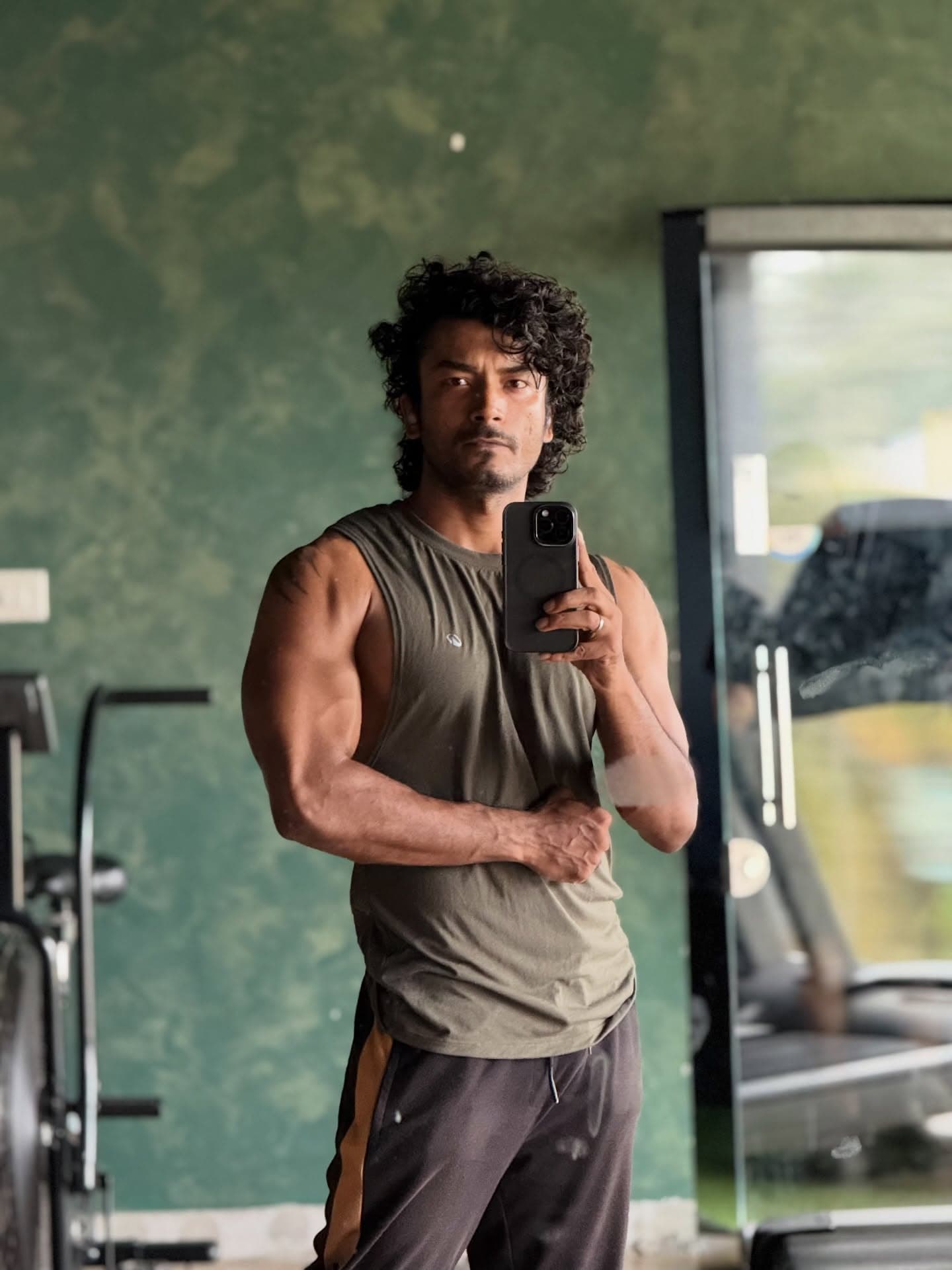
I'm in my mid-thirties now. I learned a backflip when most people my age are accepting that their "athletic days are behind them." I reject that. I reject it completely. Age is a number. Capability is a choice. And the body follows wherever the mind leads.
Avyaansh, when you're old enough to jump: jump. Learn the backflip. Learn the fear. Learn to commit. It'll teach you more about yourself than any book ever will.
Entire universe is our playground. Go play! Har Har Mahadev. 🔱

