Can You Lose Weight Without Exercise? The Honest Answer | icanbefitter | icanbefitter
Physically8 min read·26 May 2026
Can You Lose Weight Without Exercise? (The Honest Answer Nobody Gives You)
The one law that governs all fat loss — and the two paths only one of which actually works
icanbefitter
Indian Naval Officer · 14yr Fitness · AI Builder
A relative asked me once — can I lose weight without going to the gym? I gave him the real answer, not the easy one. Here it is: the one law that governs all fat loss, why the scale lies, and the two paths — only one of which actually works.
First, Let's Kill the Confusion
Most people use "lose weight" and "lose fat" as if they mean the same thing.
They do not.
Your body weight is the total of everything inside you — muscle, fat, bone, water, organs, the food currently being digested. When you step on a scale, you are measuring all of it together. The number goes up and down daily based on water retention, food timing, and a dozen other variables that have nothing to do with how lean you actually are.
Fat loss is specific. It means reducing the amount of stored body fat you carry while keeping — or ideally building — muscle. Fat loss is what changes how you look. Fat loss is what changes how you feel. Fat loss is what makes your clothes fit differently and your energy levels shift.
When people ask "can I lose weight without exercise," what they actually want is to look and feel better. And those are not always the same as weighing less.
Keep that distinction in your head as we go forward. It matters.
The One Law That Governs All of This
Here it is. The single principle that no diet trend, no supplement, and no influencer can override:
Caloric deficit is the only mechanism by which the human body loses weight.
Full stop.
If you consume fewer calories than your body burns in a day, you will lose weight. If you consume more, you will gain weight. If you consume exactly the same, your weight stays roughly constant. This is not a philosophy. This is thermodynamics. Your body is not exempt from the laws of physics.
Your TDEE — Total Daily Energy Expenditure — is the number of calories your body burns in a day accounting for your basal metabolic rate, digestion, and activity level. Every adult has one. Mine during a cut is approximately 2,600 calories. When I am cutting, I eat around 1,900. That 700-calorie daily deficit is what drives fat loss.
Everything else — meal timing, fat burners, detox teas, intermittent fasting protocols, low-carb diets — works only insofar as it helps you maintain a caloric deficit. The mechanism is always the same. The law does not change.
So yes. Technically, you can lose weight without exercise. If you eat less than you burn, your body will find the energy somewhere.
The question is: where exactly does it find it?
TDEE 2,600. Deficit 700. The maths is simple. The execution is the work.
The Two Paths — And Why One of Them is a Trap
This is where the honest answer gets uncomfortable.
Path 1: Eat Less. Do Nothing Else.
You cut your calories. You do no resistance training. You lose weight.
Your body, in a caloric deficit without a muscle-preservation signal, will take energy from wherever it is easiest to access. And the sad reality is that muscle tissue is metabolically expensive — your body would prefer to break it down rather than maintain it when resources are scarce. Fat is the stored reserve, yes, but without the stimulus to hold onto muscle, your body cannibalises both.
The result: you weigh less. But you have less muscle AND less fat. Your body composition — the ratio of muscle to fat — barely improves. You look softer, not leaner. You feel weaker, not fitter. Your metabolism slows because you now have less metabolically active muscle tissue, which means your TDEE drops, which means maintaining the deficit gets harder, which means you cut calories further, which means you lose more muscle — and the spiral continues.
This is the starvation trap. Millions of people walk into it every year. They lose 10 kilograms, look in the mirror, feel disappointed, and cannot understand why. The scale moved but the reflection did not.
There is also the rebound. Without the habit of training and eating well, the moment restriction ends — and restriction always ends because no human being can sustain pure willpower indefinitely — the weight comes back. Often more than before, because you now have less muscle to burn the extra calories.
Path 2: Quantified Nutrition + Resistance Training
You eat at a caloric deficit — but a calculated one. You know your TDEE. You hit your protein targets. You get sufficient healthy fats. Your calories are not a guess; they are a decision.
At the same time, you train with weights. Or bodyweight. Or both. The training sends a signal to your body: these muscles are being used, they are needed, do not break them down. Your body responds by preferentially burning fat for energy instead of cannibalising muscle.
The result: you lose fat while retaining muscle. Your body weight drops. But more importantly, your body composition shifts. The muscles that were hidden under the fat become visible. The shape of your body changes — shoulders broaden, waist narrows, posture improves, face sharpens.
This is what people mean when they say someone "looks fit" rather than just "looks thin." Thin is weight loss. Fit is fat loss with muscle retention.
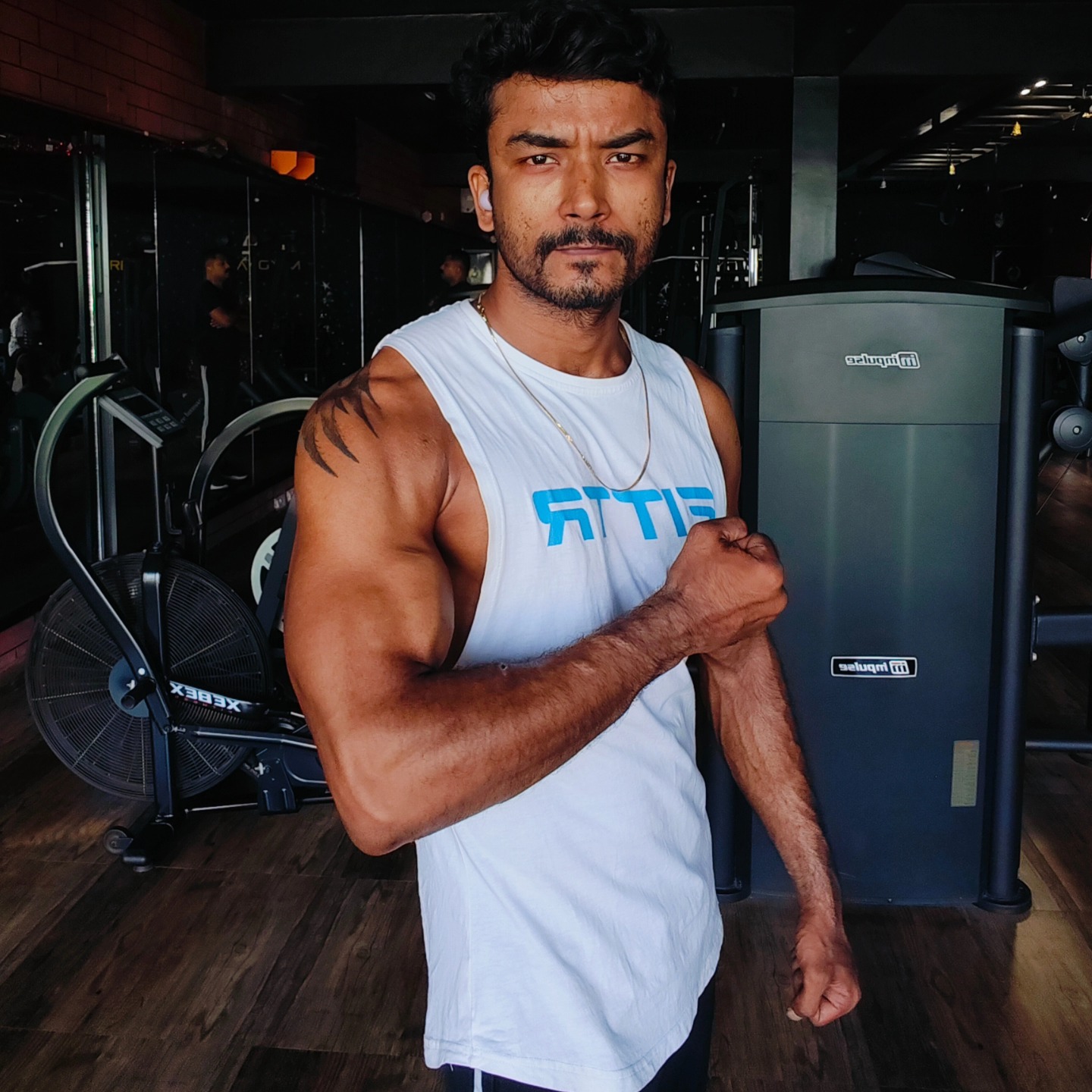
When I did my TC17 cut — Transformation Challenge 17 — I went from 81 kilograms down to 73.5 kilograms. That is 7.5 kilograms. But the number on the scale was not the story. The story was the body composition shift. The fat percentage dropped significantly. The muscle stayed. The physique changed in ways that a simple starvation diet could never have produced at the same weight.
The tools: caloric deficit of approximately 700 calories below TDEE. 140 grams of protein daily. Resistance training 5 to 6 days a week. Creatine throughout — yes, even during a cut. Swimming added in weeks 10 to 12. Steps averaged 7,000 to 8,000 per day.
No magic. No shortcuts. Just the right variables, tracked and executed consistently.
81kg to 73.5kg. TC17. No starvation. Quantified diet, resistance training, and patience.
What "Quantified Nutrition" Actually Means
I use this phrase constantly and I should explain it because it is not as complicated as it sounds.
Quantified nutrition means you know what you are eating. Specifically.
You know roughly how many calories are in your meals. You know your protein intake. You are not guessing, not eyeballing, not following some vague instruction to "eat clean." You have a number in your head and you are working towards it.
You do not need to weigh every grain of rice for the rest of your life. But you do need to do it long enough — three to four months of honest tracking — to build a mental model of what different foods cost calorically. Once that model is built, you can maintain it intuitively.
The single most important number to hit is protein. A reasonable starting target: body weight in kilograms multiplied by 1.6 to 2.0, in grams. If you weigh 75 kilograms, aim for 120 to 150 grams of protein per day. This is the lever that preserves muscle during a cut. Get this right first. Everything else is secondary.
The Honest Answer to the Original Question
Can you lose weight without exercise?
Yes. If you maintain a caloric deficit, the scale will drop.
Should you lose weight without exercise?
No — if what you actually want is to look better, feel stronger, have more energy, and build something that lasts.
Exercise — specifically resistance training — is what transforms weight loss into fat loss. It is what keeps your metabolism from collapsing during a deficit. It is what gives you something worth showing once the fat is gone. It is the difference between deflating and recomposing.
The goal was never to weigh less. The goal was to be better.
The 4-Point Protocol to Do This Right
You do not need a complicated plan. You need a correct one executed consistently.
1. Calculate your TDEE. Use any reputable online calculator. Enter your weight, height, age, and honest activity level. The number it gives you is your maintenance calories.
2. Eat 300–500 calories below your TDEE. Not 1,000 below. Not 1,500 below. A moderate deficit that your body can sustain without cannibalising muscle or destroying your energy levels. Slow and steady. This is a marathon.
3. Hit your protein every day. 1.6 to 2.0 grams per kilogram of body weight. Non-negotiable during a cut. Everything else in your diet is flexible. Protein is not.
4. Train with resistance. Weights, bodyweight, calisthenics — whatever you will actually show up to do consistently. Progressive and regular. Four to five sessions a week for at least 12 weeks before you judge the results.
Do these four things for 12 weeks. Track honestly. Adjust only if the scale is not moving for more than two consecutive weeks. Do not panic and slash calories — first check your tracking is accurate, then make small adjustments.
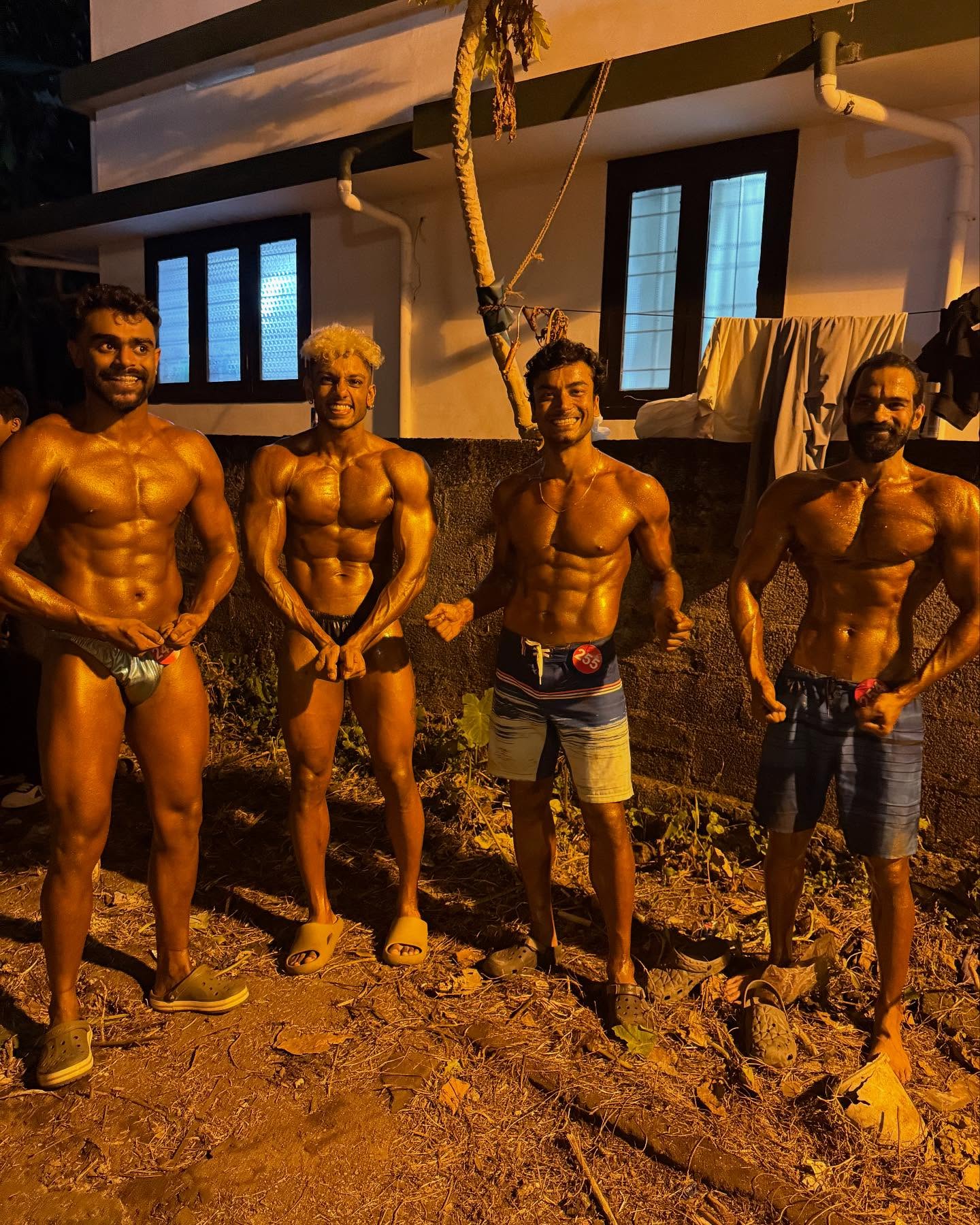
The result of following the right path, long enough. Natural. All of them.
One Last Thing
My relative's question came from a place I understand completely. He did not want to exercise. He wanted the easier path.
I did not judge him for it. I have been in that place. The gym felt like something that happened to other people — the naturally athletic, the disciplined, the ones who already had the body.
I was skinny and weak when I joined the Navy. Military training humbled me in ways I will never forget. That humbling was the gift. It showed me what I was working with and what was possible.
Fourteen years later — not by steroids, not by shortcuts, not by any trick — I can do handstands, front levers, back levers, and backflips. Every kilogram of muscle I have is mine. No cycle. No needle. No expiry date.
You do not need to become a calisthenics athlete. You just need to start. Get into a caloric deficit. Hit your protein. Lift something heavy a few times a week.
That is it. That is the whole secret.
Try Avya — the AI fitness coach I built. Tell it your weight, your goal, your schedule. It builds you a plan based on your actual context and tracks your progress week by week. Not generic advice. Yours.
Har Har Mahadev. 🔱
Written from 14 years of training, multiple transformation challenges, and a Diploma in Nutrition and Fitness Sciences (INFS).