Everyone wants the handstand. Nobody wants the eight months it takes to get there.
I know because I lived those eight months. Day after day, kicking up against the wall, falling on my face, tweaking my wrists, and wondering if my body was built for this at all. Spoiler: it was. Yours is too. But you need the truth about what it actually takes, not some "30-Day Handstand Challenge" garbage from a guy who could already do handstands before he filmed the thumbnail.
This is the real guide. The one nobody gives you. Eight months of documented progress from a guy who started with zero gymnastics background.
How It Started: Chasing Boulder Shoulders
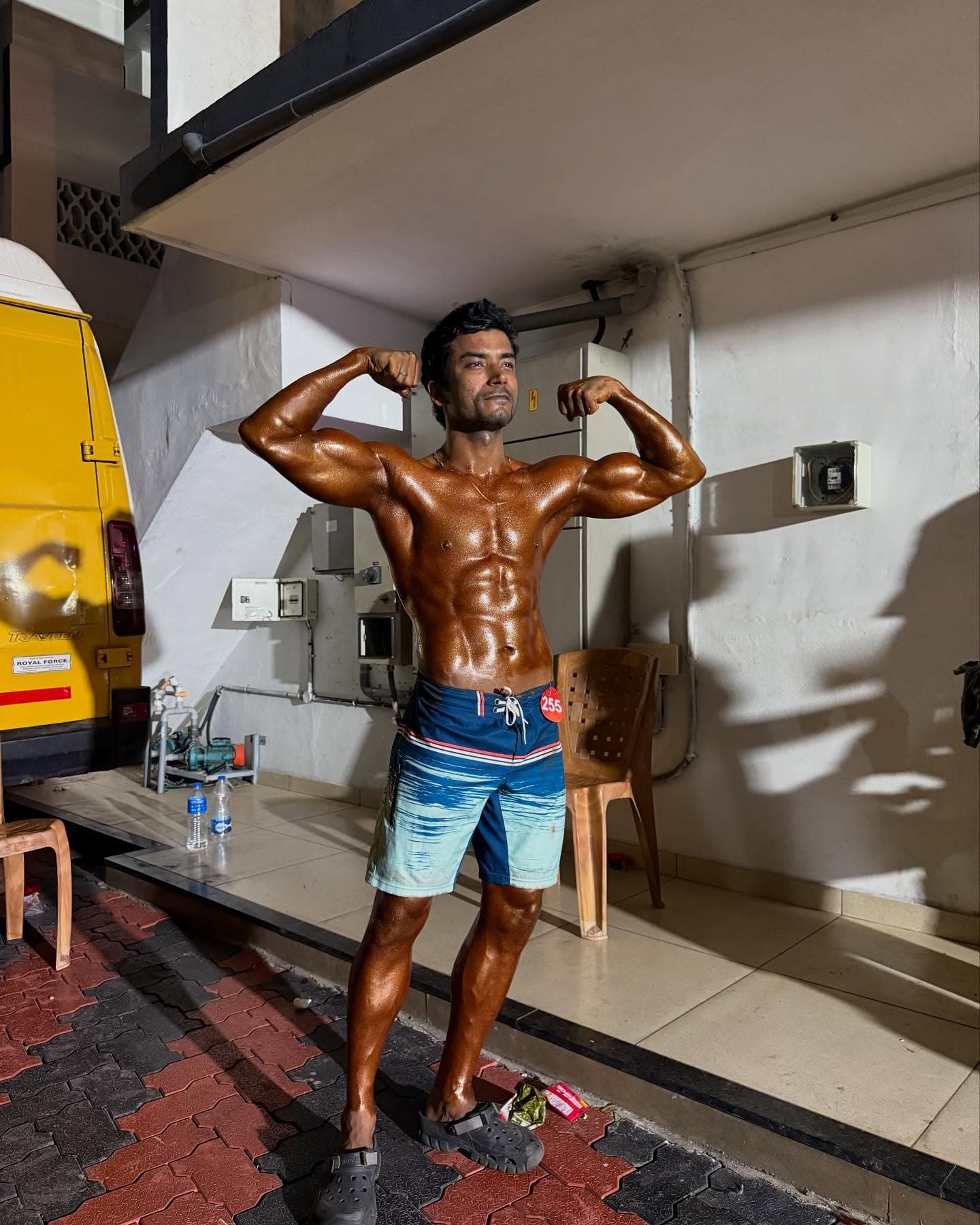
I didn't set out to learn handstands. I wanted boulder shoulders. That's it. I was deep into calisthenics, doing push-ups and dips, and I wanted shoulders that looked like they belonged on a different human being.
So I started researching. Handstand push-ups kept coming up as the ultimate shoulder builder. But to do handstand push-ups, you need to hold a handstand. And to hold a handstand, you need a foundation most people don't have.
That quest — which started from wanting boulder shoulders — has now manifested and spread roots as calisthenics. It took me down a path I never expected. But that's how it works, yaar. You start chasing one thing and discover something much bigger waiting behind it. The way is then shown automatically. 🔱
The handstand isn't just an exercise. It's the moment you learn that your body can do things your mind said were impossible. That's why it changes you.
Month 1-2: Building the Foundation (Not What You Think)
Here's where most people screw up. They watch a YouTube video, kick up against the wall on day one, and wonder why they can't balance. That's like trying to build a house by starting with the roof.
The first two months should be zero handstand work. I know that sounds insane. But listen.
Wrist conditioning — this is the most underrated piece of the puzzle. Your wrists carry your entire bodyweight in a handstand. If they're not prepared, you'll get pain, inflammation, or worse — an injury that sets you back months. I spent 10 minutes every single day on wrist circles, wrist push-ups, wrist stretches in all directions. Every day. Non-negotiable.
Then shoulder opening exercises. If your shoulders can't extend to a full overhead position — arms straight, biceps by your ears — you will never stack your body properly in a handstand. I used wall slides, shoulder dislocates with a stick, and dead hangs. Daily.
Core work. Hollow body holds. Planks — but not lazy planks. Full tension, squeezing everything, protracted shoulders, posterior pelvic tilt. 60-second holds, four sets. This is your handstand position on the ground. If you can't hold it here, you can't hold it upside down.
By the end of month two, I could hold a 60-second hollow body, my wrists felt bulletproof, and my shoulders opened up enough to get into a proper line.
Month 2-4: Wall Work and the Crow Pose Milestone
Month two is when I started actual wall handstands. Chest-to-wall, not back-to-wall. This is critical. Chest-to-wall forces you into a straight line and builds the correct muscle memory. Back-to-wall teaches you to banana — and a banana handstand is a dead end.
I worked up to three sets of 45-second chest-to-wall holds. Every session. The shoulders burned. The core trembled. It was miserable and beautiful at the same time.
Around week four, I hit my first real milestone: the crow pose. Hands on the floor, knees on the backs of my arms, feet lifted. Held it for about eight seconds and felt like I'd unlocked a cheat code. The crow pose teaches you something no other exercise can — the feeling of balancing on your hands. That proprioceptive feedback is worth more than any drill.
I also started kick-up practice during this phase. Just kicking up to the wall with control, trying to touch and come off, touch and come off. Building the motor pattern. Getting comfortable being upside down. The first fifty kick-ups were terrifying. By kick-up two hundred, they were routine.
Month 4-6: The Plateau That Breaks Most People
This is where most people quit. I need to be straight with you about this.
Between months four and six, I could hold a wall handstand for a minute, I could kick up consistently, but the freestanding hold was nowhere. Two seconds. Maybe three. Then crash. Every. Single. Time.
I questioned everything. Was my body wrong? Were my proportions off? Was I too heavy? Too old? Not talented enough?
None of that was true. Here's what was actually happening: my nervous system was consolidating. The balance point of a freestanding handstand requires micro-adjustments happening dozens of times per second in your fingers, palms, wrists, and shoulders. Your brain has to learn this. And learning takes time that doesn't show on camera.
Progress plateaus are not failure. They're your nervous system building the software to run the hardware you've already built. This applies to everything — handstands, investing, coding, life. The plateau is where the real work happens. Parwah nahi what they think. Just keep showing up.
What I did during this phase: toe pulls from wall (kick up, touch wall with toes only, try to pull off and balance), heel pulls (same but heels), and a LOT of kick-up-and-hold attempts. Minimum 20 attempts per session. Some days I got zero holds. Some days a three-second flicker. I documented every session.
Month 6-8: The Breakthrough
Month six. Something shifted. Not dramatically — not like in the movies. Just... the three-second holds became five-second holds. Consistently. Then seven seconds. Then one morning, I kicked up, found the sweet spot, and held it.
Ten seconds.
My arms were shaking. My fingers were gripping the floor like my life depended on it. And my brain was screaming "DON'T MOVE, DON'T BREATHE, DON'T THINK." But I held it. Ten beautiful, terrifying, life-changing seconds upside down with nothing but air between me and the floor.
I remember coming down and just sitting on the floor, staring at my hands. These hands held my entire bodyweight in a position that defies gravity. Eight months ago, these same hands couldn't balance me for a single second.
After the first 10-second hold, everything accelerated. Within two more weeks I was hitting 15 seconds consistently. Within a month, 30 seconds. Then I started working on handstand push-ups. Got to 7 HSPUs in one go. Seven! From the guy who started this journey wanting boulder shoulders.
Well, I got the shoulders. And a whole lot more. 🦾
The 80/20 Nobody Talks About
Everyone thinks the handstand is a shoulder exercise. Wrong. The handstand is 80% core, 20% shoulder.
Your shoulders hold you up, yes. But your core controls the balance. It's the core that makes micro-adjustments to keep your center of gravity stacked over your hands. It's the core that prevents the banana arch. It's the core that lets you transition from a handstand into a press, a straddle, or a pirouette.
I spent more time on hollow body holds, L-sits, and anti-extension work than on any shoulder exercise. And that core work is what made the freestanding handstand possible.
The other thing nobody talks about: breathing. You have to learn to breathe while upside down with your entire body under tension. Most people hold their breath, go red in the face, and bail after five seconds because they can't get oxygen. Practice breathing during your wall holds. Slow, controlled breaths. It changes everything.
What I'd Tell My Day-One Self
If I could go back to day one, here's what I'd say:
- Wrist conditioning is not optional. Ten minutes every day, forever. Not just during the learning phase. Forever.
- Chest-to-wall, not back-to-wall. Always. No exceptions until you can hold freestanding for 30 seconds.
- Film yourself. You can't feel what your body is doing upside down. The camera doesn't lie.
- The plateau is the process. Don't quit at month five. That's when the magic is loading.
- Train handstands fresh. First exercise of the session. Not after push-ups, not after a workout. Fresh nervous system, fresh balance.
- Daily practice beats marathon sessions. 15 minutes every day crushes one 90-minute session per week.
This wasn't a 30-day challenge. This was eight months of my life, and it gave me a skill I'll carry for the next fifty years. When I'm sixty, I plan to still be kicking up into handstands in the park while other people my age struggle to get off the couch.
That's the game. Not quick results. Not before-and-after photos for Instagram. Skills that last a lifetime.
No time limit. No competition. Just the will to progress.
To the Gainz. 🦾

