
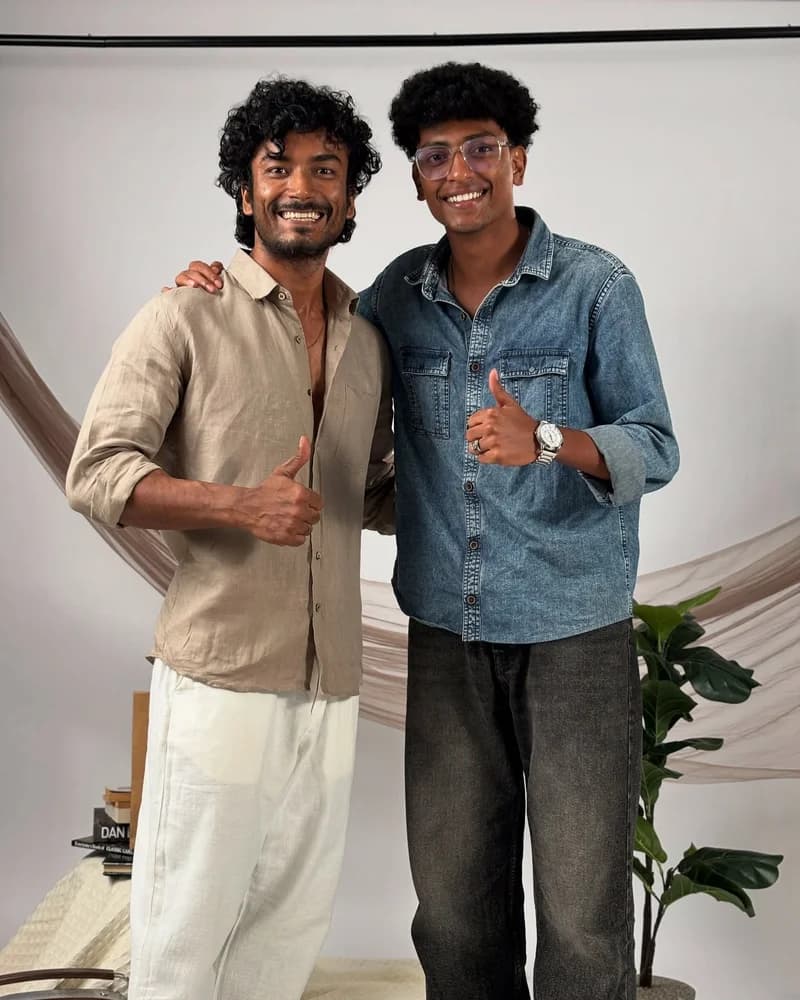
I served fourteen years in the Indian Navy. Served on land, water, and air. On ships, helicopters, and huge bases. Across coastlines and oceans, in ports I can't name and missions I won't discuss. And through all of it — every posting, every deployment, every watch rotation — there was one constant: 5 AM physical training.
Navy PT is not CrossFit. It's not a boutique fitness class. It's not a program you download from an app. It's a system built over decades to turn ordinary humans into functionally capable operators who can perform when their body is screaming to stop and their mind is begging to quit.
Everything I know about fitness — everything that actually matters — I learned on those parade grounds, obstacle courses, and ship decks. And none of it looks like what civilian fitness culture sells you.
The Daily Routine: 5 AM, No Negotiation
The Navy doesn't ask if you're a morning person. It doesn't care about your circadian rhythm preferences or your night-owl tendencies. 5 AM. Every morning. PT starts. You are there, in formation, warmed up and ready. No exceptions.
The routine was simple and brutal:
- 5:00 AM — Formation. Warm-up drills. Joint rotations, light jogging, dynamic stretches.
- 5:15 AM — PT proper. Push-ups, pull-ups, squats, burpees, bear crawls, sprints, obstacle course work. Rotating daily. Never the same session twice in a row.
- 5:45 AM — Cool down. Stretching. Sometimes a group run.
- 6:00 AM — Cold water bath. Not an ice bath trend. Just cold water because that's what the pipes delivered.
- 6:30 AM — Breakfast. Hot food. No supplements. No protein shake. Roti, eggs, dal, chai.
- 7:00 AM — Duty begins.
Thirty minutes of PT. That's it. Not two hours. Not ninety minutes. Thirty minutes of focused, intense, no-rest work that left you gasping but ready for the day. And that thirty minutes, done 365 days a year for fourteen years, built a body and a mind that civilian fitness programs can't replicate in a hundred lifetimes.
The lesson is right there, bhai. You don't need long workouts. You need consistent ones. Thirty minutes every single day defeats two hours three times a week. Every time. The Navy knew this before the fitness industry started debating "optimal training volume."
The Navy doesn't build fit people. It builds resilient people who happen to be fit. There's a massive difference. Fit people can perform when conditions are perfect. Resilient people perform when conditions are terrible. Guess which one matters in real life.
The Obstacle Course: Where Gym Fitness Dies
Every naval training establishment has an obstacle course. Walls to climb. Ropes to cross. Bars to swing from. Tunnels to crawl through. Ditches to jump. And you run the entire thing — not walk, RUN — in boots, sometimes carrying weight.
This is where gym-strong guys break. I've seen men who could bench press 120kg fail to pull themselves over a 8-foot wall because they'd never learned to use their body as a single unit. Their bench press strength was isolated — chest, triceps, shoulders working in a fixed plane. The wall requires legs, core, grip, pull, push, and spatial awareness all firing simultaneously in an unpredictable pattern.
The obstacle course taught me that strength without movement capability is incomplete. You can be strong in a gym and useless in the field. The body needs to be trained as ONE SYSTEM, not as individual parts on different machines.
This is exactly why I gravitated toward calisthenics and eventually parkour. These disciplines train the body the way the obstacle course trained us — as a complete, integrated, adaptable machine. Not isolated parts. Not "chest day" and "back day." The whole thing, working together, solving movement problems in real time.
Endurance Over Ego: The Navy Tests You When You're Already Tired
Civilian fitness culture celebrates the PR. The one-rep max. The personal best when you're fresh, rested, hydrated, caffeinated, and psyched up with your favorite playlist.
The Navy tests you when you've been on watch for 8 hours. When you've had 4 hours of sleep. When you're seasick. When it's 40 degrees on deck and the humidity makes every breath feel like drinking soup. When your body is already at 60% and the alarm sounds for an emergency drill.
That's when it matters. Not in the gym with perfect conditions. In the field with terrible ones.
This completely changed how I think about training. I stopped chasing numbers and started chasing resilience. Can I perform my skills when I'm tired? Can I hold a handstand after a long day? Can I do pull-ups after a bad night's sleep? If yes, I'm truly strong. If I can only perform when everything is perfect, I'm fragile — no matter what my numbers say.
The best training test I know: try your hardest skill at the END of a long day, not the beginning. If your handstand holds after a 12-hour day, you own that skill. If it only works when you're fresh and caffeinated — you're renting it.
The "No Excuses" Culture
In civilian life, you can skip the gym because you're tired, busy, stressed, sore, not feeling it, have a headache, it's raining, the gym is crowded, your workout partner cancelled, your pre-workout ran out, or Mercury is in retrograde.
In the Navy, the only acceptable excuse for missing PT is being in the medical ward. And even then, they'll have you doing chair exercises.
Fourteen years of that "no excuses" culture rewired my brain. I don't think about whether I "feel like" training. I just train. It's not discipline in the motivational-poster sense. It's habit so deep it's automatic. Like brushing your teeth. You don't debate whether to brush your teeth. You just do it.
That's what fourteen years of military fitness culture installs in you. The debate is removed. The option to skip is removed. And when those options don't exist, something magical happens: you just show up. And showing up consistently is the single most powerful force in fitness, investing, relationships — in everything.
Action is the mother of all solutions. The Navy taught me that before I had the words for it.
Group Accountability: The Missing Piece in Solo Training
In the Navy, you train as a unit. Your performance reflects on your division. If you slack, the entire group does extra PT. That's not a punishment — it's a system that makes individuals accountable to each other.
When I left the Navy, the hardest adjustment wasn't the routine. It was training alone. No formation. No group energy. No one watching if I cut a set short or skipped the last round. Just me, alone, with every excuse available.
This is why I believe in some form of community accountability for civilian fitness. A training partner. An online group. A parkour crew at the local park. Something that creates the social contract the military builds automatically.
You don't need a drill sergeant. But you need SOMEONE. Someone who notices when you don't show up. Someone who calls you out when you're sandbagging. Someone who celebrates when you hit a milestone. That social fabric is what keeps you training past the first enthusiastic month.
Leaders are readers. Learners are earners. The Navy taught me both. Read about your craft. Study the movements. Understand the science. The best athletes are always students. The moment you think you know everything is the moment you start declining.
Zero-Equipment Mindset
On a Navy ship, there's no gym. There might be a small fitness space with a few dumbbells and a pull-up bar, but during deployment, space is a luxury and equipment is minimal. You train with what you have — which is usually nothing except the deck beneath your feet and the railings around you.
This is where my love for calisthenics was truly born. Not in a park. Not watching YouTube. On a ship in the middle of the ocean, doing push-ups on the deck, pull-ups on overhead pipes, dips between railings, and running laps around the flight deck at sunrise.
That zero-equipment mindset stays with you forever. Once you know — truly KNOW in your body — that you can get a brutal workout anywhere with nothing, the entire concept of "needing a gym" disappears. You become untethered from facilities. Your body is the gym. The world is the gym. And you carry it with you everywhere you go.
I would recommend lifting weights, calisthenics, and swimming over other forms of activities. But if you can only pick one — pick the one that needs nothing. Because that's the one you'll do when everything else is unavailable.
Training to Be Capable vs. Training to Look Good
The civilian fitness industry sells aesthetics. Six-pack abs. Vascular arms. The "beach body." The before-and-after photo.
The Navy trains for capability. Can you climb that wall? Can you swim that distance? Can you carry that weight over that terrain? Can you function for 36 hours on minimal sleep and still make clear-headed decisions?
The difference between these two orientations is the difference between a model and a soldier. Both might look fit. Only one IS fit in any meaningful sense.
When I train now, I train for capability. Can I do a handstand? Can I hold a front lever? Can I deadlift 140kg? Can I backflip? Can I run 5 kilometers without stopping? These are capability questions. They have yes/no answers. They don't depend on lighting, camera angles, or a pump.
I think about the video I saw of a 90-year-old man in a gym, still lifting, still moving, still capable. Still showing up. Ninety years old. And I think: what's stopping you? What's your excuse? If that man can walk into a gym at ninety, you can do your push-ups at thirty, forty, fifty. The excuse list is empty.
What the Navy Gave Me
Fourteen years. No pension (I left before the pensionable service period). No safety net. No corporate severance package. What did I walk away with?
A body I built from zero with no equipment and no coaching. A mind that doesn't negotiate with excuses. A discipline system that runs on autopilot. A deep understanding that the body and mind are not separate systems — they're one machine that runs on consistency, resilience, and purpose.
These are the things that civilian fitness never teaches. Not because it can't — but because it doesn't have to. Civilian fitness is optional. Military fitness is survival. And the lessons you learn when something is survival-level important are different in kind, not just in degree.
Avyaansh, I left the Navy on July 4, 2024. I left it for you. So I could build something that would last longer than a service record. But everything I learned in those fourteen years — every morning at 5 AM, every obstacle course, every deployment, every cold-water bath — is baked into this platform, this philosophy, this life I'm building for us.
No time limit. No competition. Just the will to progress.
Keep hustling. Har Har Mahadev. 🔱

