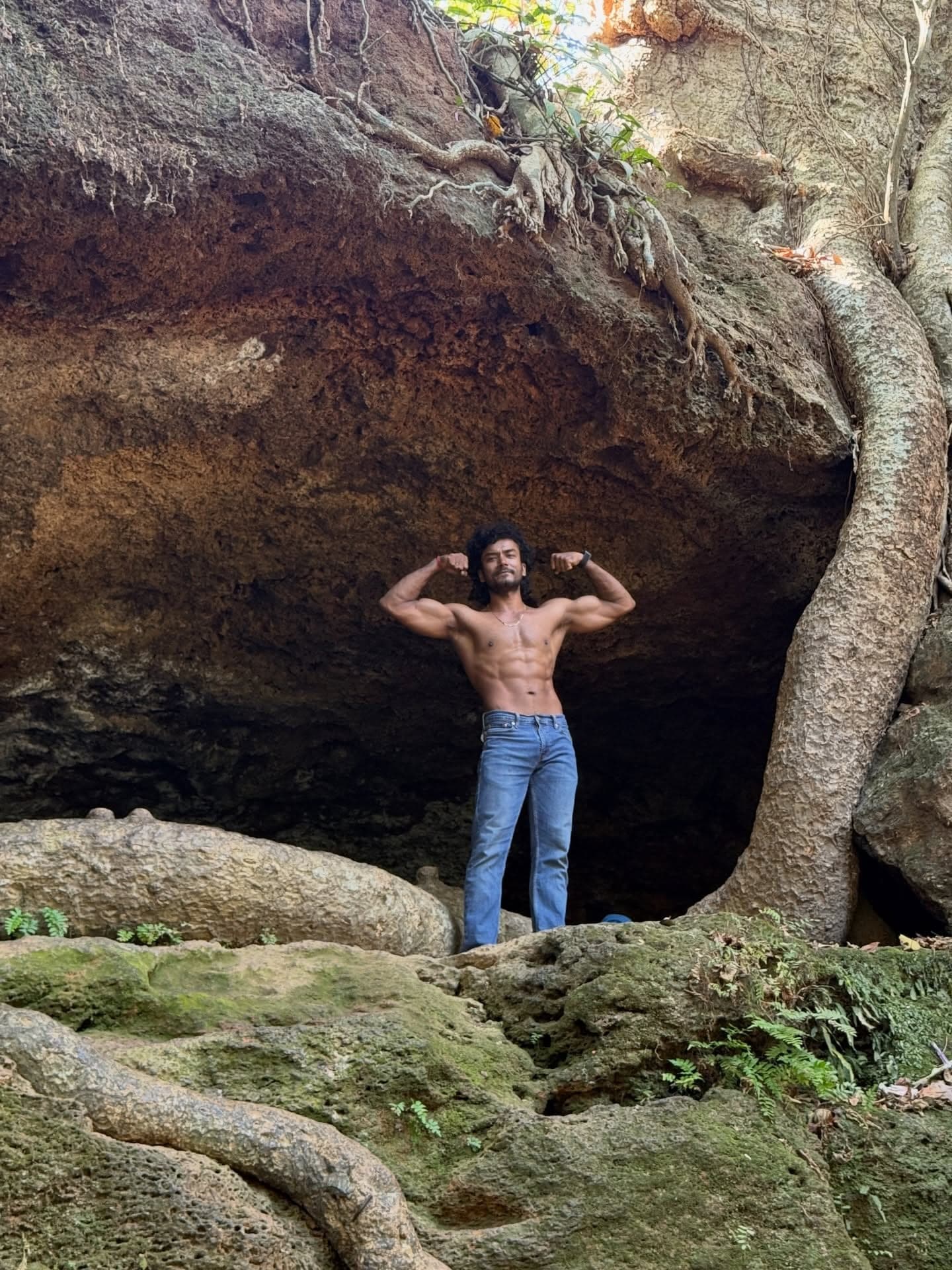

I Started in a Public Park with a Rusted Pull-Up Bar
There was no fancy outdoor gym. No rubber flooring. Just a park in a small naval base town with a pull-up bar that had more rust than paint on it. The ground was uneven dirt. Sometimes there were goats nearby.
That rusted bar changed my life. And it can change yours too — because calisthenics doesn't care about your gym budget, your city, or your equipment. It only cares whether you show up.
India is actually the perfect country for calisthenics. Every neighborhood has a park. The weather lets you train outdoors 10 months of the year. And the best part? It's completely free. No ₹3,000/month gym membership. No waiting for machines. No commute. Just step outside and train.
What Exactly Is Calisthenics?
Calisthenics is strength training using your own bodyweight. Push-ups, pull-ups, dips, squats, handstands, muscle-ups, levers — all of it falls under calisthenics.
But it's more than just "bodyweight exercises." It's a system of progressions. You start with the basics and work toward advanced skills that look impossible — until you can do them. A handstand isn't magic. It's a push-up progression taken to its logical extreme. A front lever isn't superhuman. It's a pull-up progression mastered over years.
That's what hooked me. Every movement has a clear path from "I can't do this at all" to "I can hold this for 30 seconds." The progress is measurable, visible, and deeply satisfying.
Calisthenics vs. Gym — Why I Switched
I spent years in the gym before switching. Here's what I noticed:
- Gym builds muscles in isolation. Calisthenics builds your body as a single unit. You don't have a "chest day" — you have a "pushing day" that hits chest, shoulders, triceps, and core simultaneously.
- Gym strength doesn't always transfer. I could bench press 80 kg but couldn't do a muscle-up. Calisthenics strength transfers to everything — climbing, sports, martial arts, daily life.
- Calisthenics teaches body control. Holding a handstand requires proprioception, balance, and total body tension. No machine teaches you that.
- Cost: ₹0 vs ₹36,000/year. That gym membership adds up. Calisthenics requires a pull-up bar (₹1,500 for a doorway bar) or a park. That's it.
What You Need to Start
Minimal equipment. Seriously.
- A pull-up bar: Doorway bar (₹1,000-2,000 on Amazon India) or a park bar. This is the only essential piece.
- A flat floor: For push-ups, planks, and handstand practice.
- Parallel bars or two sturdy chairs: For dips. Most parks in India have some version of parallel bars.
- Optional — resistance bands: ₹500-1,000. Useful for assisted pull-ups when you're starting out.
- Optional — parallettes: ₹1,500-2,500. For L-sits and deeper push-up variations later.
Total startup cost: ₹1,000-3,000. Compare that to a single month at a decent gym in any Indian city.
The Beginner Routine — Your First 12 Weeks
Train 3 days per week. Monday, Wednesday, Friday — or any 3 non-consecutive days. Each session takes 35-45 minutes.
Warm-Up (5-7 minutes)
- Arm circles: 20 forward, 20 backward
- Wrist circles: 15 each direction
- Cat-cow stretches: 10 reps
- Bodyweight squats: 15 reps (slow)
- Scapular pull-ups (dead hang, pull shoulder blades down): 10 reps
The Workout
Do 3 sets of each exercise. Rest 60-90 seconds between sets. Move to the next exercise after completing all 3 sets.
1. Push-Ups (or Incline Push-Ups if you can't do 5 regular ones)
3 sets × 5-15 reps. Hands shoulder-width. Full range of motion — chest touches the ground, arms lock out at the top. If regular push-ups are too hard, put your hands on a bench or step. Lower the incline as you get stronger.
2. Pull-Ups (or Australian/Inverted Rows)
3 sets × 3-8 reps. If you can't do a single pull-up yet, start with inverted rows: find a low bar, hang underneath it with your feet on the ground, and row yourself up. You can also use a resistance band looped over the bar for assisted pull-ups.
3. Dips (or Bench Dips)
3 sets × 5-12 reps. Use parallel bars if available. If not, put your hands on a bench behind you, feet on the ground, and lower yourself. Full dips on parallel bars are the goal.
4. Bodyweight Squats → Lunges
3 sets × 15-20 reps. Go deep — below parallel. Once 20 reps becomes easy, switch to walking lunges or Bulgarian split squats with your back foot elevated.
5. Plank Hold
3 sets × 20-60 seconds. Forearms on the ground. Body straight as a rod. Squeeze your glutes and brace your core. If 60 seconds is easy, move to a hollow body hold.
6. Dead Hang
3 sets × 15-30 seconds. Just hang from the bar. This builds grip strength and decompresses your spine. Simple but critical.
Progression Rules
- When you can do 3 sets of 12 reps with good form, make the exercise harder.
- Push-ups → Diamond push-ups → Decline push-ups → Pike push-ups
- Inverted rows → Pull-ups → Chin-ups → Archer pull-ups
- Bench dips → Parallel bar dips → Weighted dips (backpack with books)
- Squats → Lunges → Pistol squat progressions
- Plank → Hollow body → L-sit progressions
Common Mistakes Beginners Make in India
- Skipping pull-ups because they're hard. Pull-ups are the single most important upper body exercise. Find a way. Use bands. Do negatives (jump up, lower yourself slowly). But never skip them.
- Training every single day. Muscles grow during rest, not during training. Three days on, rest days between. Your body needs recovery.
- Ignoring nutrition. You cannot build muscle without adequate protein. Indian diets tend to be carb-heavy and protein-deficient. Track your protein for one week — most people are shocked at how low it is. Aim for 1.6g per kg of bodyweight.
- Chasing advanced skills too early. I see guys trying muscle-ups after two weeks. You'll hurt yourself. Master the basics for at least 6 months. The basics are not boring — they're the foundation for everything.
Where to Train in India
Every Indian city has options:
- Public parks: Most have some form of pull-up bars or monkey bars. If not, a sturdy tree branch works.
- Open-air gyms: Many cities have installed free outdoor gym equipment in parks. The quality varies, but the pull-up bars are usually solid.
- Your home: A doorway pull-up bar plus floor space is enough for 90% of calisthenics training.
- School/college grounds: If you're a student, the playground bars are perfectly usable.
The Long Game
Calisthenics is not a quick fix. It's a practice. Like learning an instrument — you start with basic chords and one day you're playing complex pieces. I'm 14 years in and still learning new skills.
But the payoff is enormous. You'll build real, functional strength. You'll move better. You'll look athletic, not just "big." And you'll save lakhs of rupees on gym memberships over your lifetime.
"Your body is the only equipment you'll ever truly own. Learn to use it."
Find a bar. Start with the routine above. Show up three times a week for 12 weeks without changing anything. Then come tell me you don't feel like a different person.

